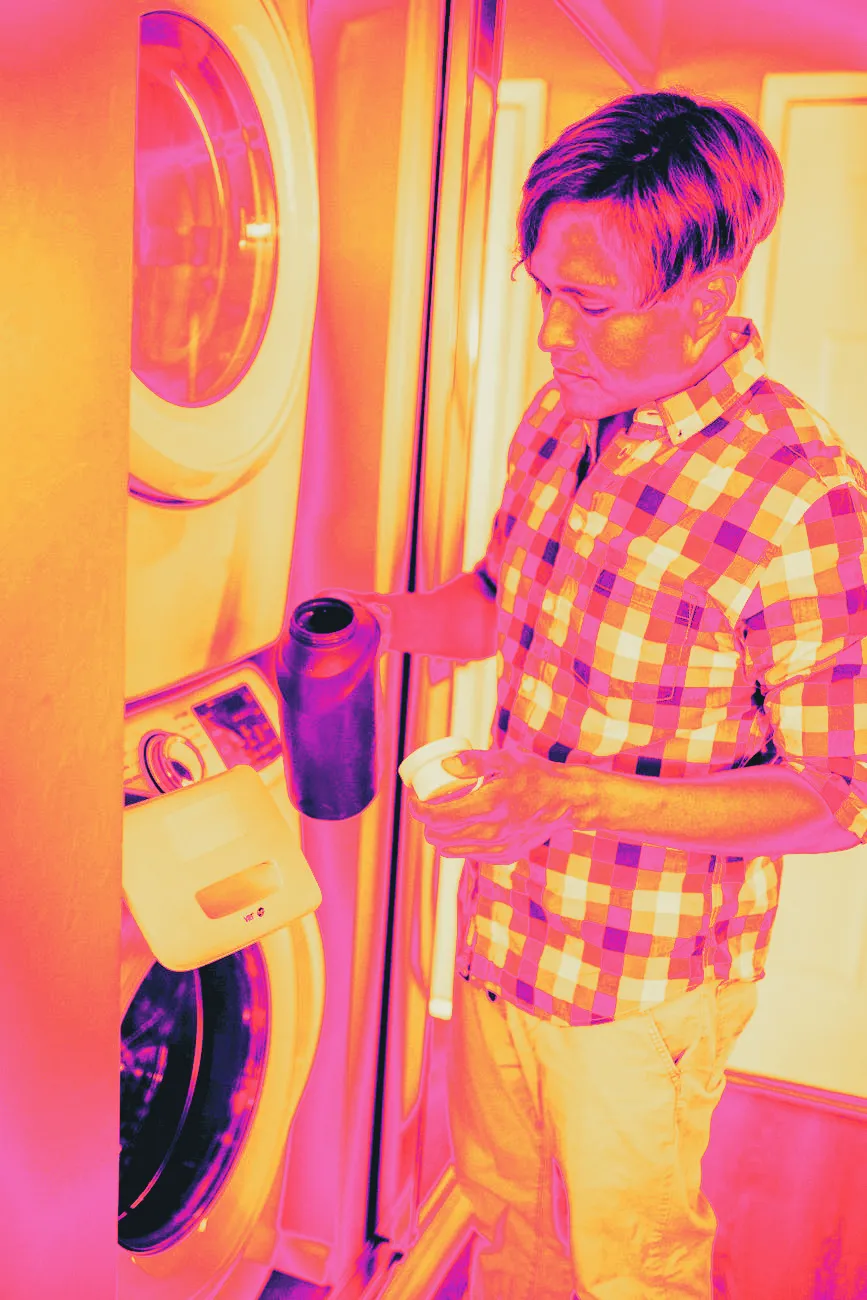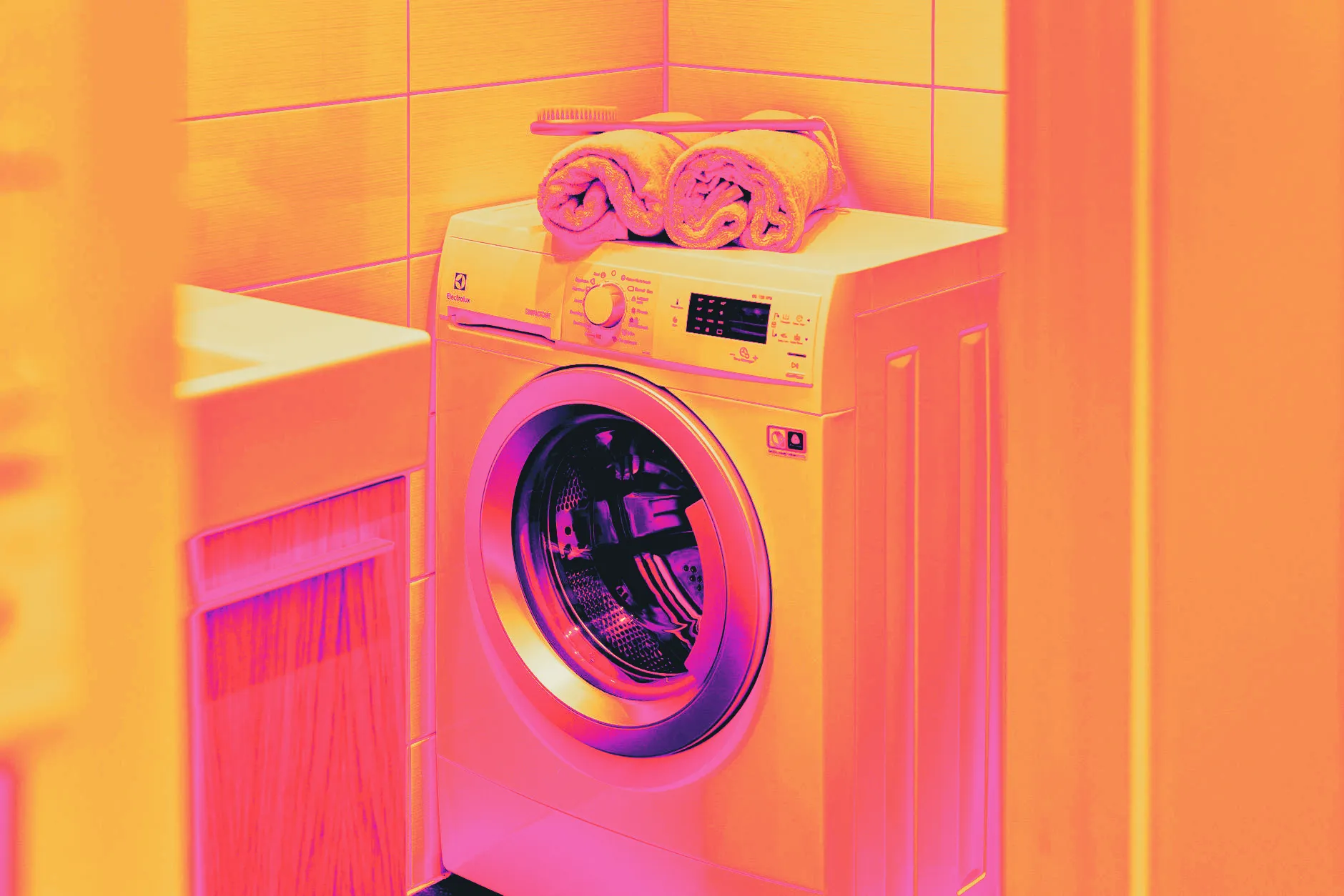
A new front-loader doesn’t ship with a defect, and a single deep-clean rarely fixes the smell for good if the daily habit that caused it doesn’t change too.
The smell comes from biofilm growing in the folds of the rubber door gasket, where trapped moisture and leftover detergent residue never fully dry out between washes. Leaving the door and detergent drawer open after each load, so the gasket actually dries, prevents it more reliably than any cleaning product run after the fact.
Why front-loaders trap what top-loaders don’t
A front-loader seals against the door with a rubber gasket, which is what lets it run on a fraction of the water a top-loader uses without leaking. That same seal creates a fold that stays damp long after the cycle ends, especially at the bottom where water naturally pools. A top-loader’s open tub dries out in open air; a closed front-loader door traps warm, humid air inside a dark space, which is close to ideal conditions for mold and mildew. Leftover detergent and fabric softener residue, along with lint and skin oils rinsed out of clothes, give that growth something to feed on.
What actually fixes it
- Leave the door open between washes. This does more than any single product, since it removes the damp, sealed environment the growth depends on.
- Leave the detergent drawer cracked open too. It traps moisture the same way the gasket does, and it’s easy to forget since it’s less visible.
- Wipe the gasket fold dry with a cloth after a wash if you’re closing the machine back up right away, since that’s where water pools first.
- Run an empty hot cleaning cycle periodically, with a washing machine cleaner or plain distilled white vinegar, to reach residue buildup a wipe-down can’t.
What doesn’t fix it, or only partly
Bleach can knock back visible growth and mask the smell temporarily, but it doesn’t reach residue trapped deep in the gasket fold and does nothing about the damp conditions that let it come back. A single deep-clean without changing the after-wash habit is a reset, not a fix: the gasket goes right back to trapping moisture on the very next load. Running hotter wash cycles doesn’t help either if the door still gets shut on a wet gasket afterward, since the heat is gone long before the gasket actually dries.
Frequently asked questions
- Is the smell mold, and is that dangerous?
- It's typically mold or mildew growing on organic residue trapped in the gasket, the same kind of growth that appears in any warm, damp, enclosed space that doesn't fully dry out. Keeping the gasket dry between washes addresses the cause directly, which matters more than which product removes it once it's there.
- How often should I run a cleaning cycle?
- Roughly once a month for most households, more often for a household that washes daily or runs frequent cold, short cycles that leave more residue behind. Your machine's manual usually states a specific interval for its own cleaning cycle setting.
- Does switching detergents help?
- Switching to a lower-residue formula and using less of it can reduce what's left behind for biofilm to feed on, but it doesn't replace drying out the gasket. A machine run with a perfectly dosed detergent still grows odor if the door stays shut and damp after every load.