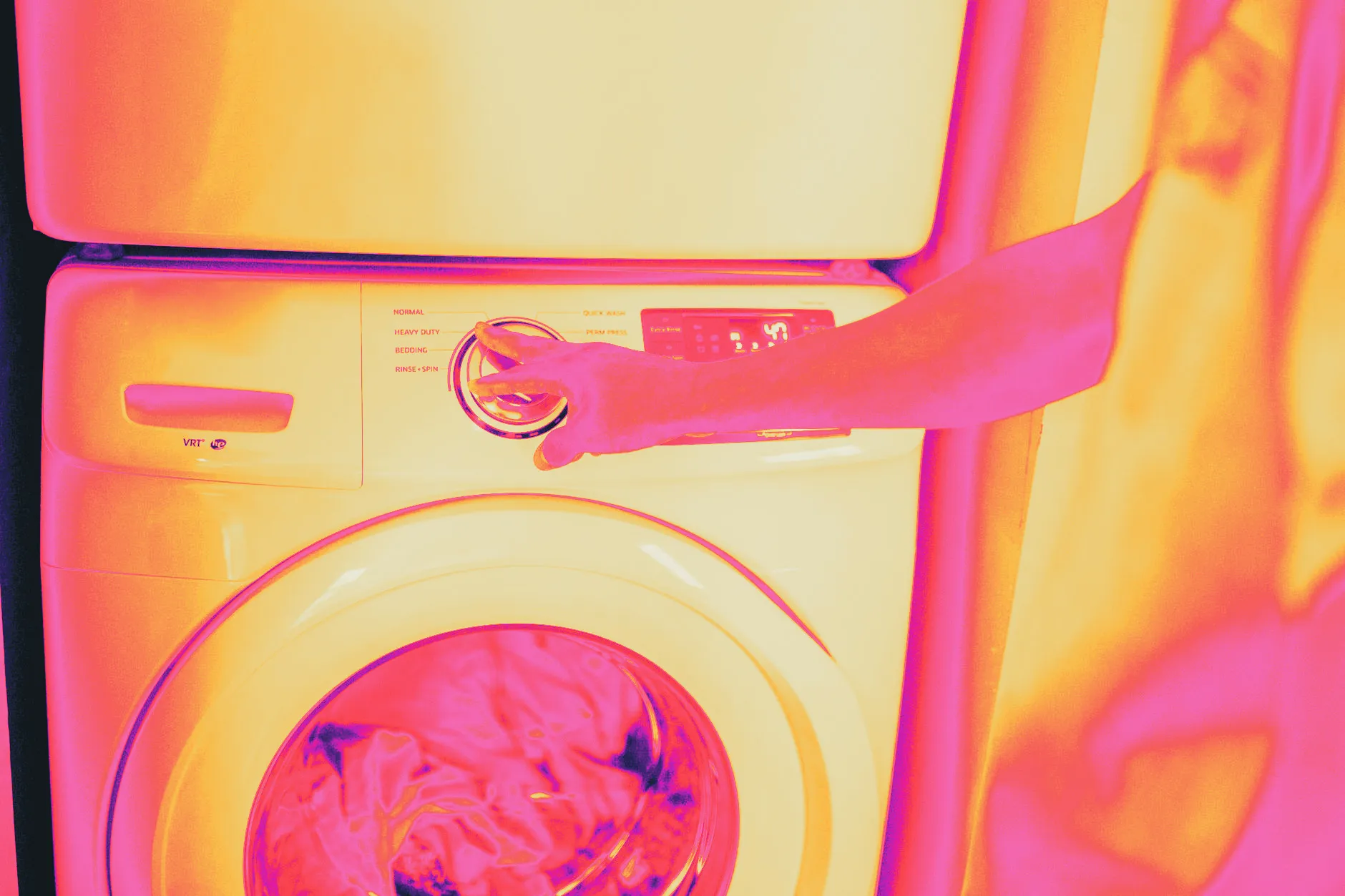
A cold water detergent formula changes what’s inside the bottle, not just the instructions on it: enzymes and surfactants engineered to stay active at lower temperatures instead of relying on heat to help dissolve the detergent and loosen stains. Without that engineering, a standard formula run cold is doing the same job with less help from the water itself.
Why does water temperature matter to a wash at all? Heat does two things a cold wash has to find another way to accomplish: it helps detergent dissolve faster and more completely, and it speeds up the chemical reactions enzymes use to break down stains. A “cold water” formula is built to get both of those benefits without the heat.
Enzymes are proteins, and most chemical reactions involving proteins run faster at higher temperatures, up to a point where heat starts breaking the enzyme down instead of helping it. A cold water formula uses enzyme variants selected or engineered specifically to stay active at lower temperatures, so protease, amylase, and lipase — the enzymes covered in “What the Enzymes in Laundry Detergent Actually Do” — keep breaking down protein, starch, and fat stains even without warm water accelerating the reaction.
Surfactants face a related problem: some don’t dissolve fully in cold water, which can leave undissolved detergent residue on fabric instead of rinsing away. Cold water formulas use surfactant blends chosen for solubility at lower temperatures, so the detergent itself actually gets into solution instead of sitting as a film.
The trend traces back to the 1980s, when surfactant chemistry improved enough to make cold- water performance viable at scale, and detergent concentration increased alongside it — the same shift covered in “What ‘Concentrated’ Detergent Actually Means.” A regular formula run cold doesn’t necessarily fail outright, since some stains lift with surfactant action alone, but it’s working without the temperature-driven boost a cold-specific formula is built to replace chemically.
Calculator
Laundry detergent calculator
- Doses per year
- 286 doses
- Packs per year
- 4.5 packs
- Reorder interval
- about 81 days
Would rather not track any of this?
STUD is the home reordering system that lets you reorder your exact household products in seconds. Learn more
Open the Laundry detergent calculator on its own page
See all calculators
Frequently asked questions
- Does a cold water formula clean as well as a regular one in warm water?
- A cold water formula is built to perform in cold water specifically, and most also work fine warm or hot. A standard formula not engineered for cold water is the one more likely to underperform when the temperature drops, not the reverse.
- Why wash cold at all if hot water cleans better?
- Heating water accounts for most of a washing machine's energy use per load. Cold water also reduces fading, shrinking, and wear on fabric over time. A formula engineered to work cold removes the main reason people default to hot in the first place.
- Are all "cold water" claims on a bottle backed by the same formulation change?
- Not necessarily. Checking whether a product specifies enzyme or surfactant engineering for lower temperatures, rather than just printing "cold water" on the label, is the more reliable signal than the label claim alone.